



Bitumen waterproofing is the use of polymer-modified bitumen — as factory-made membrane rolls or liquid emulsion coatings — to create a continuous barrier that stops water passing into a structure. It has been the backbone of construction waterproofing for decades because bitumen bonds aggressively, tolerates heat, and remains economical at scale.
The two forms
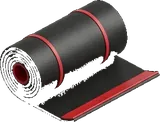
1. Bitumen membranes — factory-manufactured rolls, typically 1.5–6 mm thick, made of a polyester or fiberglass carrier saturated in APP- or SBS-modified bitumen, welded to the substrate with a torch (or self-adhesive, like InsuStick). Membranes are the primary waterproofing layer for serious applications. Flagship examples: InsuGrand (APP) and InsuPrene (SBS).
2. Bitumen emulsions — water-based liquid coatings applied by brush, roller or spray: Insucoat and Insuguard. Used as primers under membranes, as damp-proofing on foundations, and as protective coatings.
Where bitumen waterproofing is used
- Flat and sloped roofs — exposed mineral-finished membranes or covered systems: exposed roof / non-exposed roof
- Basements and foundations — membranes plus protection boards: system here
- Wet areas — bathrooms and kitchens before tiling: wet-area system
- Water tanks and structures — tank waterproofing
- Bridges and infrastructure — SBS membranes for decks that flex: bridge decks
- Green roofs — with anti-root membranes
Why it remains the standard
Modern alternatives exist — PVC and TPO single-ply among them (Insutech supplies Protan membranes too) — but modified bitumen keeps three advantages: welded seams stronger than the sheet itself, forgiving detailing on complex shapes, and repairability decades later.
Insutech has produced bitumen membranes and emulsions in Egypt since 1987 — 38 million m² of membrane and 15,000 tonnes of emulsion capacity per year, exported to 105+ countries. Have an application in mind? Request a quote.