


Exposed Roof Waterproofing
A fully exposed roof system built on mineral-surfaced APP membranes — the waterproofing layer is the finished roof, made to face sun and weather directly.
One System, Built to Work Together.
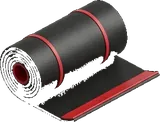
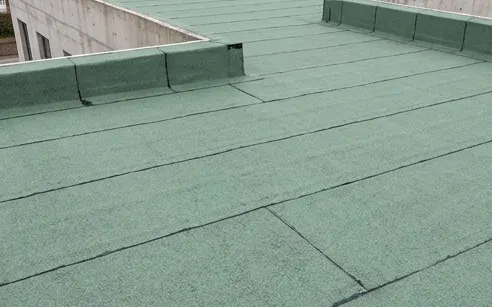
On an exposed roof, the waterproofing membrane is the final surface — there is no screed, tile or ballast above it. The system therefore relies on membranes with factory-applied surface finishes: mineral slates for UV protection and color, or aluminum foil for heat reflection.
Insutech's APP polymer-modified membranes are designed exactly for this duty. The APP modifier gives the bitumen high softening points and long-term UV stability, while the surface finish shields the compound and gives the roof its final appearance.
- Flat roofs with no regular foot traffic
- Sloped and curved concrete or metal roofs
- Industrial sheds and warehouse roofs
- Renovation over existing sound membranes
- Parapets, upstands and exposed details
See the System in Action.
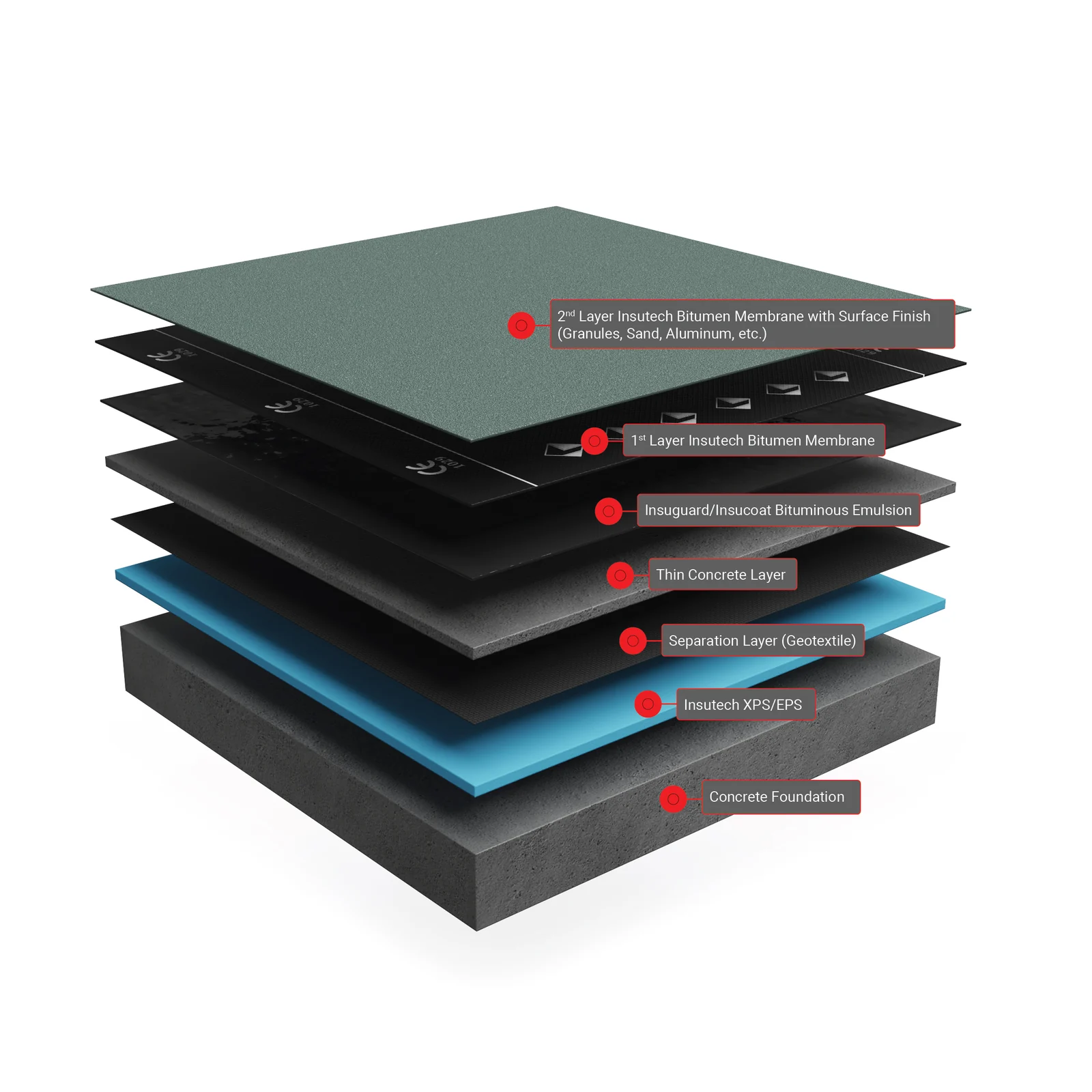
Layer by Layer.
- 01
Substrate Preparation
The concrete deck is cleaned, repaired and screeded to falls so water drains freely to the outlets.
- 02
Bituminous Primer
A primer coat binds surface dust and ensures full adhesion of the torch-applied membrane to the deck.
- 03
Base Membrane Layer
A plain-finish APP membrane is torch-applied as the first waterproofing layer, with staggered overlaps.
- 04
Mineral-Surfaced Cap Sheet
The exposed top layer — an APP membrane finished with colored mineral slates or aluminum foil, torch-applied over the base layer.
- 05
Detailing & Termination
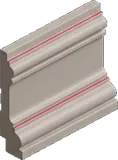
Upstands, drains and penetrations are reinforced and terminated with mechanically fixed edge profiles and sealant.
 01
01No Extra Protection Needed
The mineral or foil finish is the final surface — no screeds, tiles or gravel layers, saving weight, time and cost.
 02
02Long-Term UV Stability
APP-modified bitumen plus mineral surfacing withstand direct sun and high roof temperatures season after season.
 03
03Fast, Clean Installation
Torch-applied rolls go down quickly with no wet trades above the membrane and no curing time before handover.
 04
04Easy Inspection & Maintenance
With the membrane visible, surveys and local repairs are straightforward for the life of the roof.

Common questions about this system.
Where is the Exposed Roof Waterproofing system used?
It is typically used for flat roofs with no regular foot traffic, sloped and curved concrete or metal roofs, industrial sheds and warehouse roofs, renovation over existing sound membranes and parapets, upstands and exposed details.
Which Insutech products are used for exposed roof waterproofing?
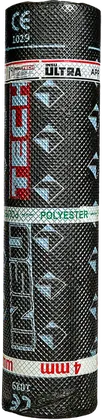
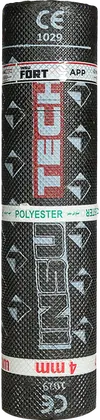
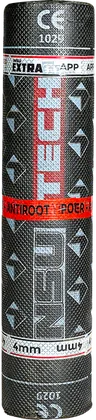
The recommended system is built with InsuGrand, InsuUltra, InsuFort and InsuExtra — full details for each are on the recommended products cards on this page.
How is the system installed?
The system is installed in 5 stages: substrate Preparation, bituminous Primer, base Membrane Layer, mineral-Surfaced Cap Sheet and detailing & Termination. The system build-up section on this page illustrates the full sequence. An application video is also available above.
What are the main advantages of the exposed roof waterproofing system?
The key advantages are no Extra Protection Needed, long-Term UV Stability and fast, Clean Installation — each is explained in the Key Benefits section on this page.