

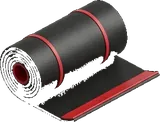








The recommended thickness for a bitumen membrane on a flat roof is 4 mm for the main waterproofing layer — 3 mm for underlayers and light-duty work, 5 mm where mechanical stress or long exposure demand extra reserve. Insutech membranes such as InsuGrand and InsuFort are produced from 1.5 mm up to 6 mm, so the real question is matching thickness to duty.
What thickness actually does
Thickness is the membrane’s reserve of waterproofing compound. More compound means deeper weld pools at the laps, more material over the carrier, and more tolerance for surface roughness and wear.
The practical guide
| Thickness | Typical use |
|---|---|
| 3 mm | Base layer in two-layer systems; damp-proofing; light-duty covered work |
| 4 mm | The standard single-layer specification for roofs and foundations |
| 4.5 – 5 mm | Exposed mineral-finished roofs, trafficked details, demanding infrastructure |
| Self-adhesive 1.5 – 3 mm | Flame-free detailing and underlays — InsuStick range |
Two-layer systems (3 mm base + 4 mm mineral cap) remain the premium roof build-up — see the exposed roof system for the full stack.
Thickness is not the only lever
A 4 mm membrane on a polyester (PES) carrier outperforms a 5 mm membrane on a weak carrier in puncture and tensile strength — carrier, polymer (APP vs SBS — comparison here) and workmanship carry as much weight as millimetres. That’s why our datasheets state carrier, thickness and mechanical values together.
Getting it specified right
Every Insutech membrane page carries its full datasheet, and our engineers size systems daily for projects across 105+ export markets. Tell us the roof or structure — request a quote — and you’ll get thickness, layers and products in one specification.